Drain Cleaning
How Sewer Cleaning Equipment Works Together
Hydro jetting vs. snaking: learn how sewer cleaning, camera inspections, and locating work together—and when each service actually makes sense.
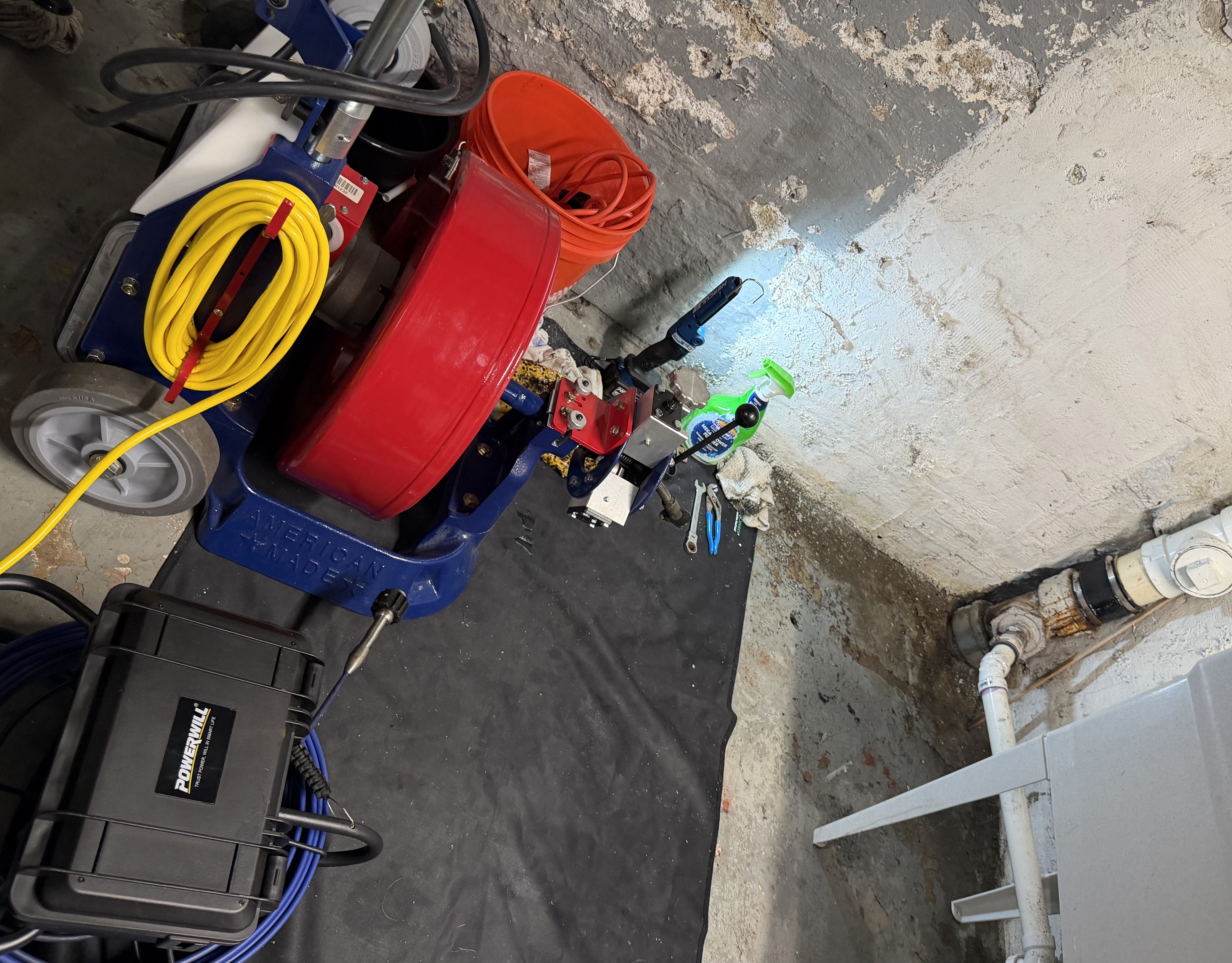
Hydro Jetting vs. Snaking: How Sewer Cleaning, Cameras and Locating Actually Work Together
A sewer cable, hydro jetter, camera and locator are not four versions of the same tool.
They answer different questions.
A cable can restore flow and remove certain obstructions. Hydro jetting can clean material from more of the pipe interior. A sewer camera lets you inspect what is actually visible inside the line. A locator can help determine where a sonde or camera head is positioned underground.
The mistake is assuming every sewer problem needs all four — or that the most aggressive piece of equipment is automatically the best choice.
A better approach is to figure out what needs to be answered next.
The Short Answer: These Tools Do Different Jobs
If you only remember one thing, make it this:
| Service | Primary job | Often useful for | What it can tell you | Main limitation |
|---|---|---|---|---|
| Mechanical cleaning | Restore flow and physically clear an obstruction | Paper, debris, roots and many main-line stoppages | How the line responds while being worked | Does not visually inspect the pipe |
| Hydro jetting | Clean and flush material from the pipe interior | Grease, sludge, buildup, certain root conditions and recurring maintenance problems | How the line responds to more thorough cleaning | Not appropriate for every pipe or every blockage |
| Sewer camera inspection | Visually inspect accessible portions of the pipe | Recurring problems, roots, buildup, offsets, standing water and visible defects | What can actually be seen inside the inspected section | Cannot see through opaque sewage, through a solid blockage or outside the pipe |
| Sewer locating | Locate a transmitting sonde from above ground | Mapping line direction and marking a specific camera position | Approximate surface position, route and supported depth information | Does not tell you what the defect is |
Sometimes a main sewer stoppage only needs to be cleared.
Sometimes clearing the line raises another question.
That is where the next tool earns its place.
First, What Part of the Sewer Are We Talking About?
Homeowners often use main drain, main sewer, sewer lateral and sewer line to describe roughly the same problem. Technically, different portions of the drainage system have different names.
Inside a building, fixture and branch drains eventually feed into the main building drain. The building sewer or lateral carries wastewater away from the structure toward the municipal sewer or another approved disposal system.
That distinction matters because one clogged sink is a very different investigation from several fixtures affected by a restriction farther downstream.
This article is mainly about the larger building drain and sewer path, not ordinary hair clogs in a bathroom sink.
What Mechanical Sewer Cleaning Actually Does
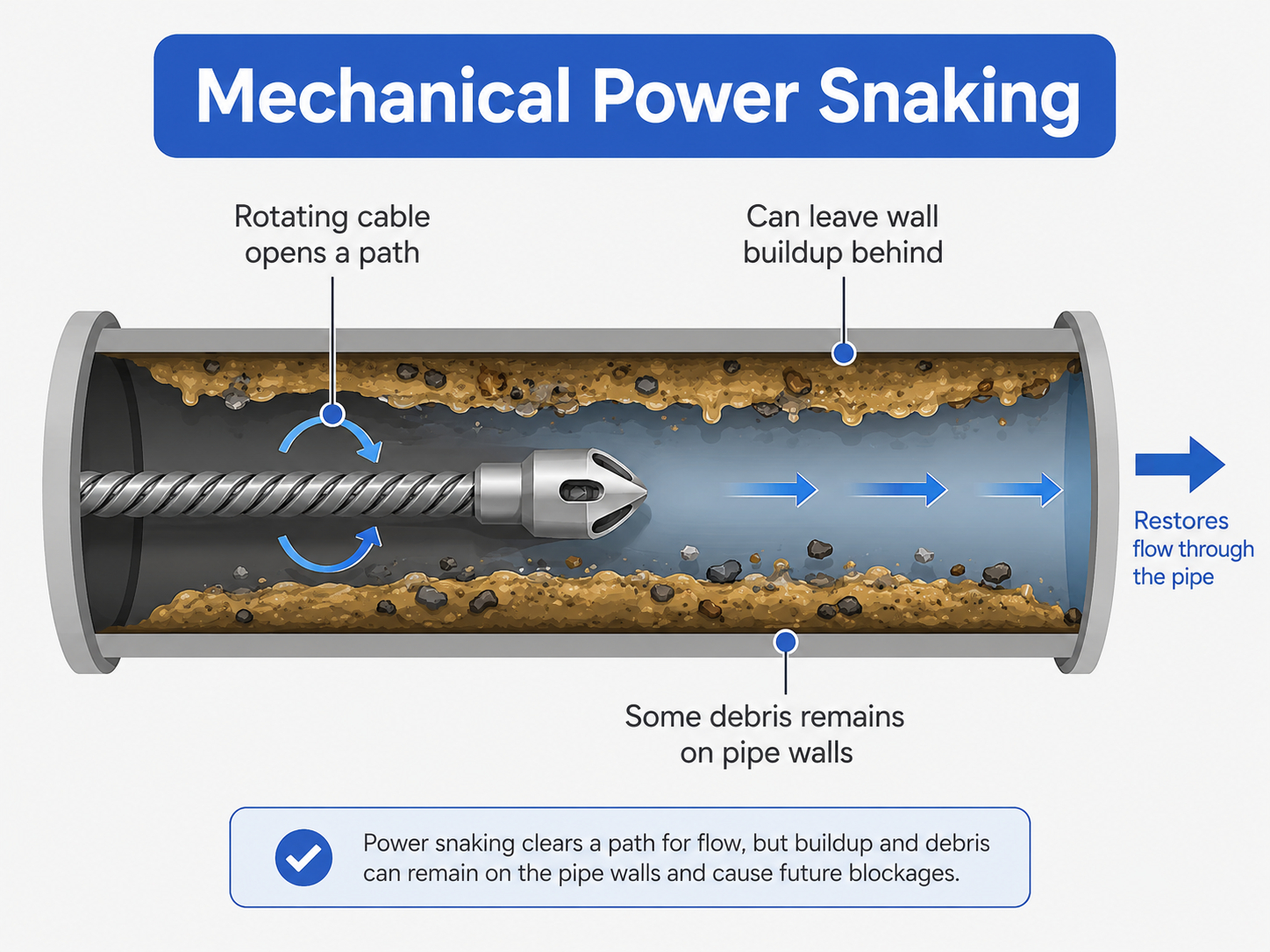
Mechanical sewer cleaning uses a powered cable with an appropriate head or cutter to work through an obstruction and restore a path through the line.
For many stoppages, that is exactly the right tool.
When cabling makes sense
A cable can be useful when the immediate job is to physically open a blocked line. Depending on the equipment, access and obstruction, different heads may be used to work through debris or cut intrusive roots.
The goal is not simply to shove something down the pipe. A technician pays attention to how the cable advances, where resistance occurs, what comes back on the cable or cutter, whether flow returns, and whether the obstruction behaves like something that can be mechanically cleared.
Those observations can provide useful clues.
They still are not the same thing as seeing the pipe.
Learn more about our main sewer line cleaning service.
What cabling cannot tell you
A cable does not prove why a sewer developed the obstruction.
If roots are removed, for example, the roots came from somewhere. Cutting them restores space in the pipe, but the cable does not show the condition of the joint, crack or opening that allowed them to enter.
Likewise, opening a path through grease or buildup does not necessarily tell you how much material remains on the pipe wall.
That does not make cabling a bad service.
It means cleaning and diagnosis are different jobs.
What Is Hydro Jetting?
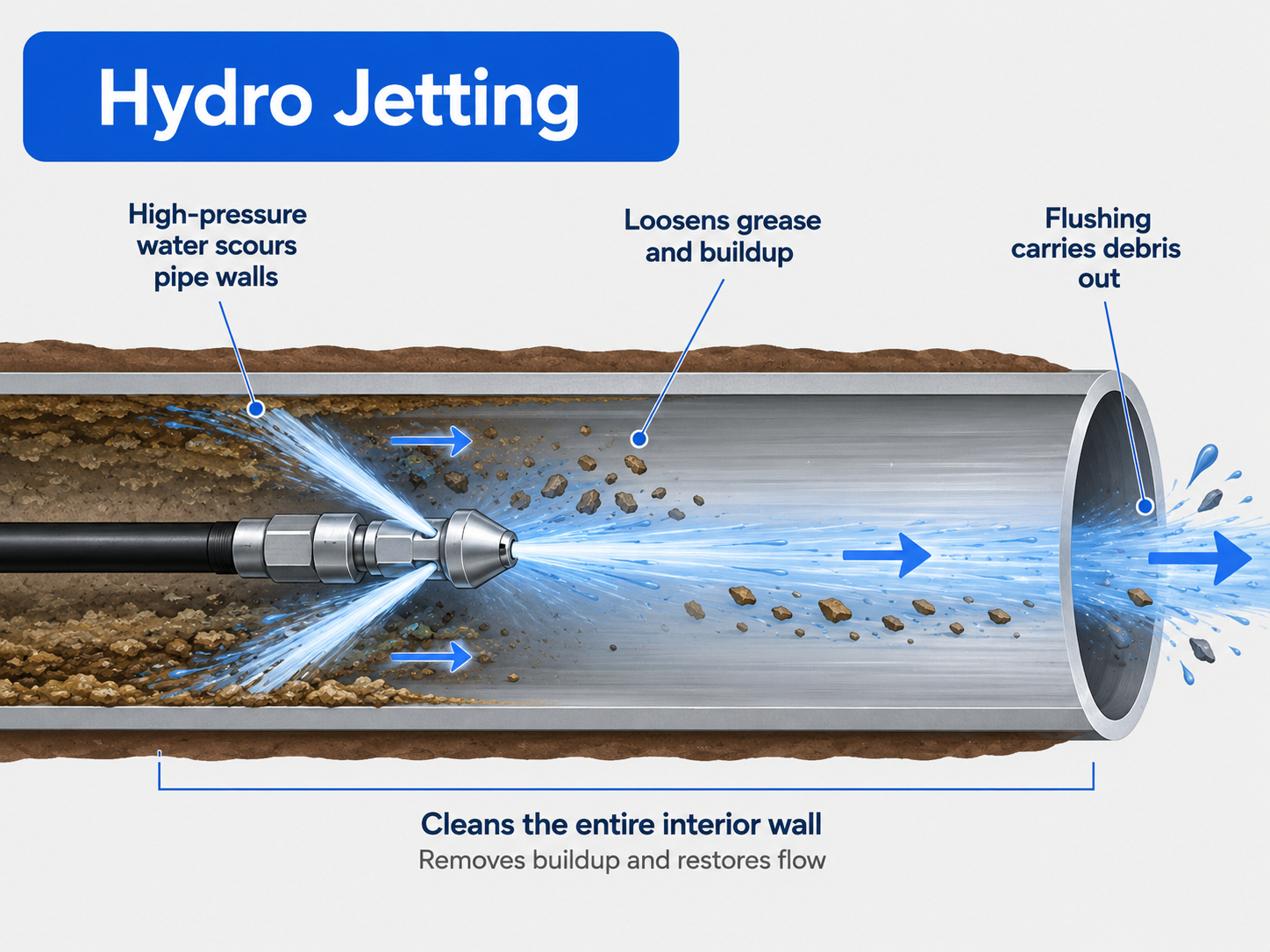
Hydro jetting uses pressurized water delivered through a specialized hose and nozzle to clean and flush material from a drain or sewer line.
The important part is not just pressure.
Water flow, nozzle selection, the direction of the jets, access, pipe diameter, material being removed and the condition of the line all matter.
Hydro jetting vs. snaking: what is the real difference?
Snaking or cabling works mechanically against an obstruction. Hydro jetting uses moving water to break up, scour and flush material through the line.
A cable may be the smarter tool when the priority is reopening a hard stoppage or working mechanically through roots.
Jetting becomes especially useful when the problem involves material coating or accumulating along the pipe, such as grease, sludge and certain forms of buildup.
Neither method wins automatically.
The blockage decides.
When hydro jetting may make sense
Jetting may be considered when:
- a line contains substantial grease or sludge;
- loose material needs to be flushed from the pipe;
- buildup remains after an initial opening has been established;
- recurring maintenance conditions justify a more thorough cleaning;
- root material can be appropriately addressed with the available jetting equipment;
- or the line needs to be cleaned enough to improve inspection conditions.
Commercial kitchen and high-use drainage lines are obvious examples where buildup along the pipe wall can matter as much as the single point where flow finally stopped.
When jetting may not be the first move
A completely stopped line full of wastewater may need another method to establish flow before jetting makes practical sense.
Pipe condition matters too.
High-pressure water should not be treated like a harmless upgrade that can be applied blindly to every old sewer. If the condition or material of a line creates legitimate concern, more information may be needed before aggressive cleaning is chosen.
This is one reason the statement “hydro jetting is always better than snaking” is wrong.
Sometimes the cable is the right tool.
Sometimes the jetter is.
Sometimes neither cleaning method answers the question that matters.
Can hydro jetting remove tree roots?
Hydro jetting can remove some root material when the equipment, nozzle and line conditions are appropriate, but root intrusion is not automatically a jetting problem.
Mechanical root cutting is also widely used.
More importantly, removing roots does not repair the opening that allowed those roots into the pipe. If they are entering through a failed joint, crack or other defect, cleaning restores flow but does not change that structural condition.
Recurring roots are therefore one situation where inspection can become more valuable than simply debating which cleaning machine is stronger.
When Should a Sewer Line Be Camera Inspected?
A sewer camera inspection makes sense when seeing the accessible interior of the pipe could change the next decision.
Recurring stoppages are one common reason.
Unusual material coming back during cleaning, suspected root intrusion, unexplained standing water or a need to document a questionable section can also justify an inspection.
A camera does not automatically need to follow every routine drain cleaning.
Why visibility matters
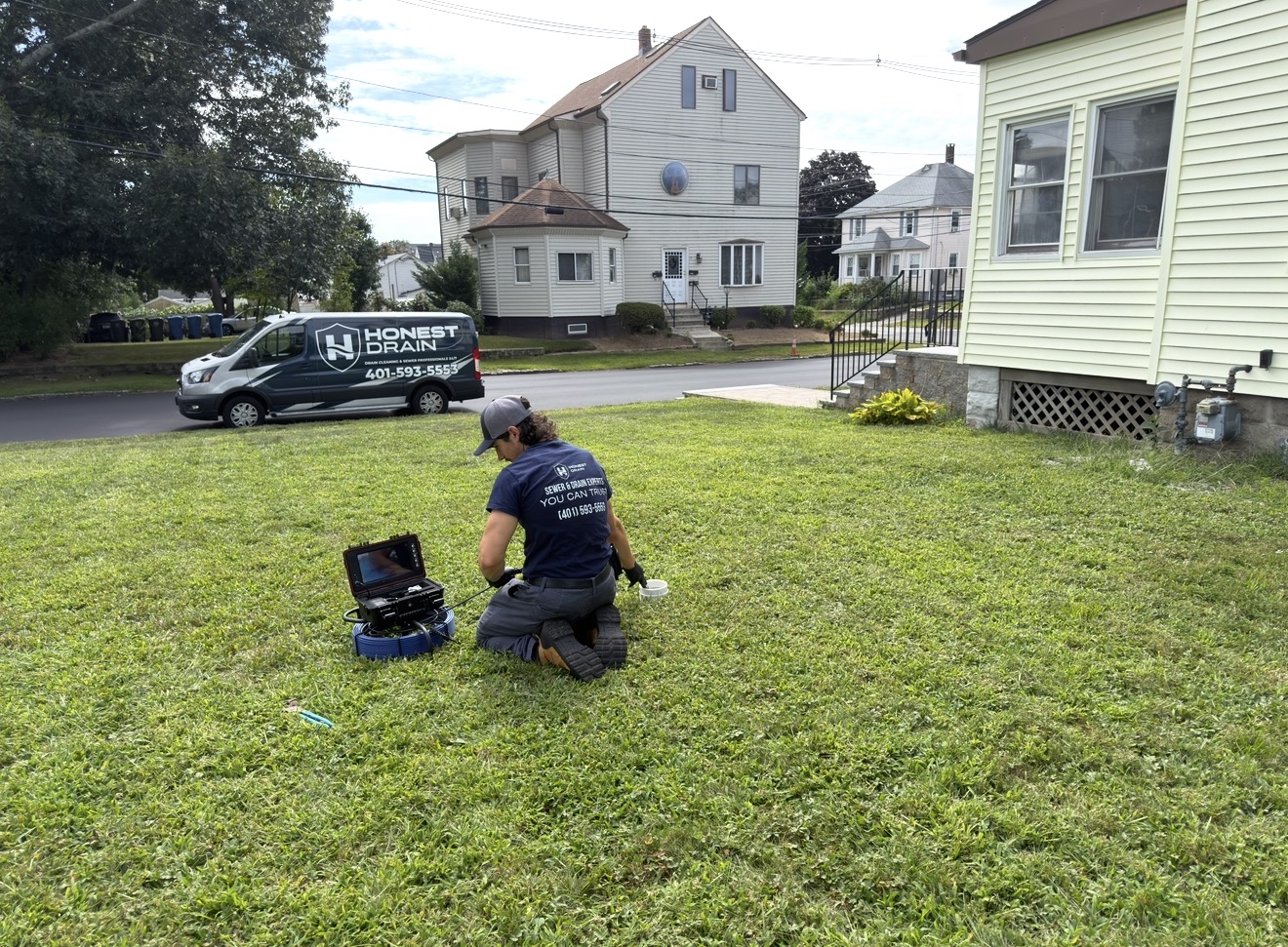
A sewer camera is useful because the operator can actually look at the inside surface of an accessible pipe.
But a camera is not magic.
If the line is packed with sewage, the lens may simply be underwater. If grease or debris coats the lens, the picture becomes poor. If a solid obstruction stops the camera, the section beyond it remains unseen.
That is why the order of operations matters.
Sometimes the useful sequence is:
clear first → restore enough flow and visibility → inspect second
Trying to inspect a completely obstructed sewer before restoring usable conditions may produce little more than a video of dirty water.
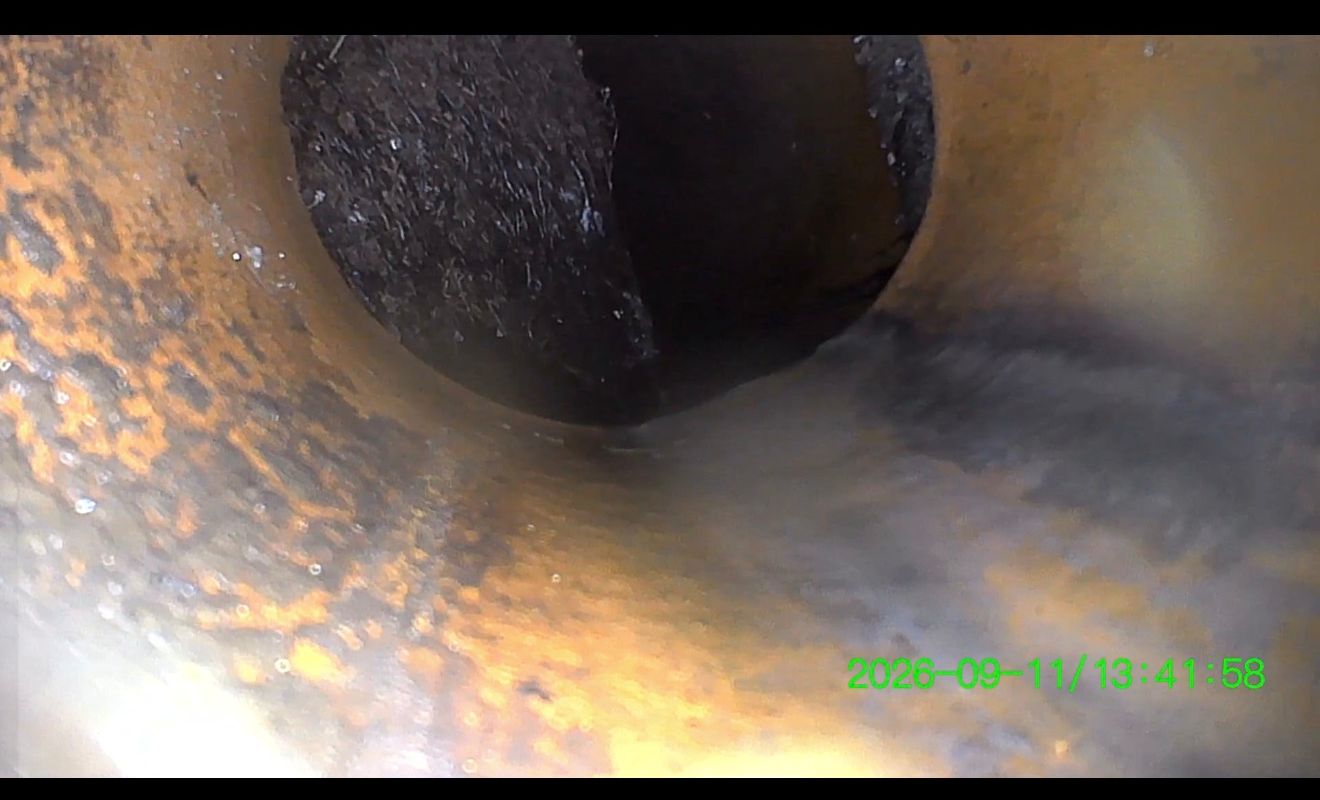
What a sewer camera can show
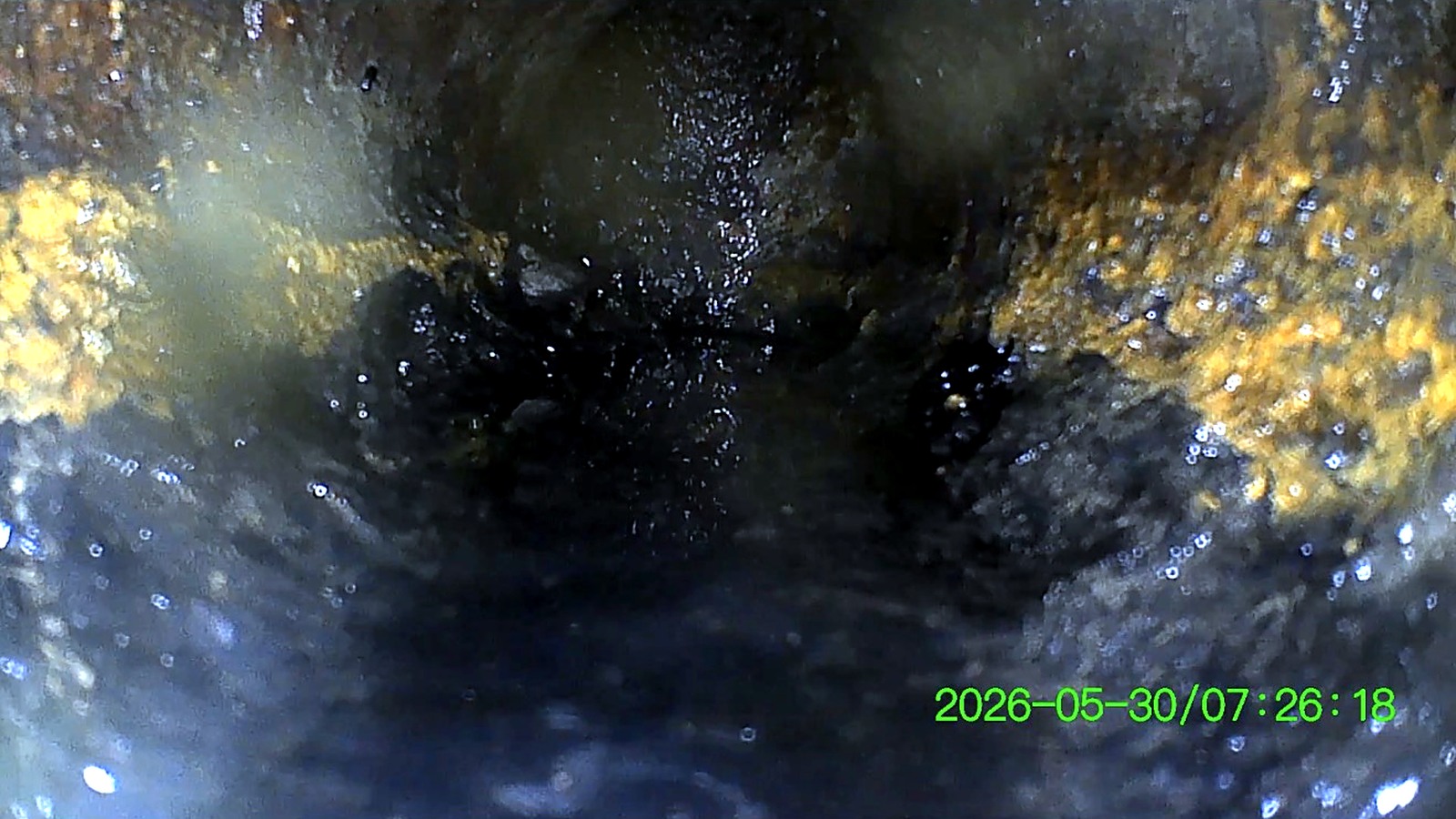
Under good conditions, a camera may reveal things such as:
- visible root intrusion;
- remaining grease or buildup;
- heavy scale or tuberculation;
- changes in pipe material;
- questionable or offset joints;
- visibly cracked or deteriorated sections;
- foreign objects;
- standing water;
- sections where the camera becomes submerged;
- or an obstruction the camera physically cannot pass.
The word visible matters.
A technician should separate what the footage actually shows from what the footage merely suggests.
What a sewer camera cannot prove
A camera normally shows the interior surface in front of the lens.
It does not see through the pipe wall into the surrounding soil.
It cannot inspect beyond a blockage it cannot pass.
It cannot show a submerged portion of pipe clearly when murky water blocks the view.
And although standing water can be an important observation, the video should be interpreted with drainage behavior, distance, cleaning history and other evidence before somebody announces a definitive cause.
A camera can dramatically improve a sewer diagnosis.
It still requires interpretation.
What Does Sewer Locating Actually Do?
A sewer camera and a sewer locator perform different jobs.
Many sewer cameras contain a small transmitting device called a sonde near the camera head. Standalone transmitters can also be attached to suitable drain-cleaning or jetting equipment.
A receiver operated at the surface detects that transmitted signal.
A common sewer-camera sonde frequency is 512 Hz.
Camera head, sonde and receiver
Think about it this way:
Camera = what can we see?
Sonde = where is the transmitting head?
Receiver = where does that signal appear to be from the surface?
Once the camera reaches a specific joint, obstruction or questionable area, the transmitting head can be stopped there.
The operator then works above ground with the receiver to identify the signal and mark the corresponding location.
That can be useful when nobody knows exactly where the sewer runs or when an observed condition needs to be tied to a position in the yard, driveway, basement slab or another part of the property.
Can a sewer locator estimate depth?
Compatible locating equipment can provide a depth estimate when the signal and locating conditions support it.
Treat the word estimate seriously.
Signal distortion, nearby utilities, metal, reinforced structures, depth, equipment setup and locating technique can affect a reading.
Locating is extremely useful. It should not be represented as magically producing a survey-grade coordinate under every condition.
Seeing a defect vs. locating it
These are separate questions.
A camera might show a questionable joint at a particular cable distance.
That does not automatically tell the homeowner exactly where that joint sits beneath the property.
Locating the sonde at that point connects those two pieces of information:
this is what we observed inside the line
and
this is approximately where that observation is underground
That distinction becomes especially useful if another contractor later needs to evaluate repair options.
How These Services Can Work Together
A sensible main-sewer investigation might look like this:
Symptoms → establish access → clear the obstruction → confirm flow → inspect if the findings justify it → locate a specific area if knowing its underground position matters
That is an example, not a rule.
A straightforward stoppage may end after cleaning and flow verification.
Another job may clear easily but have a long history of recurring problems that makes a camera worthwhile.
A camera may reveal an accessible line that looks reasonably open and leave no reason to locate anything.
Or the inspection may identify one questionable section where locating the camera head provides useful information for the next decision.
The purpose is not to use every machine on the truck.
The purpose is to keep answering the question that matters.
Mechanical Cleaning vs. Jetting vs. Camera vs. Locating
Here is the simplest decision model.
Need to physically reopen the line?
Mechanical cleaning may be the starting point.
Need to remove substantial grease, sludge or pipe-wall buildup?
Hydro jetting may become the better cleaning method if access and pipe condition support it.
Need to know what the accessible interior of the pipe looks like?
That is a camera question.
Need to know where the camera or transmitter is underground?
That is a locating question.
The tools complement each other because they collect different kinds of information.
What Would Make Sense in These Situations?
Several fixtures suddenly back up
The first priority is usually restoring drainage, not conducting an elaborate underground investigation before anything flows.
The exact cleaning method depends on access and what is encountered.
The main line was cleared but the problem keeps returning
Repeated stoppages create a different question:
Why does this line keep becoming restricted?
A camera inspection after the line is open enough to see can provide information that another blind cleaning cannot.
Heavy grease or soft buildup is suspected
A cable may restore an initial opening, but jetting can be useful where accumulated material along the interior of the pipe needs to be cleaned and flushed.
Roots keep returning
More root cutting may restore service again, but recurring intrusion makes it reasonable to ask where the roots are entering and what the surrounding pipe looks like.
That is where inspection can add value.
A camera shows a questionable area underground
If the visible finding could affect future work, the camera head or sonde can sometimes be stopped at that location and located from the surface.
Seeing the area and locating the area are separate steps.
Nobody knows where the sewer lateral runs
Locating can help trace sections of a sewer when a compatible transmitter can be advanced through the line.
The result still depends on access, signal quality and physical conditions.
What Changes the Cost?
There is no responsible single price for “sewer diagnosis” because two jobs can require completely different amounts of work.
Factors commonly include:
- where usable access is located;
- how long and accessible the line is;
- how severe the stoppage is;
- what equipment is required;
- whether roots or heavy buildup are involved;
- whether usable camera visibility can be established;
- whether inspection or locating is actually needed;
- property layout;
- and how much time the work takes.
A basic clearing and a clearing followed by cleaning, recording and locating are different scopes.
The better question before work begins is not merely “What does sewer cleaning cost?”
It is:
What are we doing, why are we doing it, and what would cause that scope to change?
Rhode Island Sewer Lines: One Local Detail Worth Knowing
There is also an important distinction between a public sewer main and the privately maintained sewer serving a property.
In Cranston, the city explains that it maintains the public sewer mains, while the property owner is responsible for the internal plumbing and sewer lateral running from the structure to the municipal main.
That is useful context when somebody says, “The sewer is clogged.”
The problem could involve the property's drainage system, the private lateral or, in a different situation, public infrastructure. Those are not automatically the same responsibility.
A good first call should establish what is backing up, where it is happening and what kind of sewer connection the property uses before assuming the answer.
Frequently Asked Questions
Is hydro jetting better than snaking?
Not universally. Snaking mechanically clears many obstructions effectively. Hydro jetting is especially useful when the goal is cleaning and flushing buildup from more of the pipe interior. The right method depends on the obstruction, access and pipe condition.
Do you need a sewer camera after every clog is cleared?
No. A camera makes the most sense when the information it provides could change the next decision. Recurring problems, roots, unusual findings or concern about pipe condition are common reasons to inspect.
Can a sewer camera see tree roots?
Yes, when roots are visible and the camera can reach them. Heavy roots can also prevent the camera from advancing farther.
Can a sewer camera see through standing water?
Not reliably. If the lens is submerged in murky wastewater, visibility of the submerged pipe wall can be poor or nonexistent. The presence of standing water can itself be useful information, but it does not mean everything beneath that water has been inspected.
Can hydro jetting damage old sewer pipes?
Jetting should be selected with pipe condition in mind. Old, deteriorated or questionable piping deserves more caution than sound piping. Pressure and nozzle choice should fit the actual line rather than assuming maximum power is automatically better.
What does a sewer locator actually locate?
It detects a signal transmitted by a sonde, often installed near the camera head or attached to compatible equipment. It helps determine the transmitter's approximate position from above ground.
Can a sewer locator tell how deep the pipe is?
Compatible locating equipment can display a depth estimate when conditions and signal quality allow it. The result should be treated as an estimate rather than a guaranteed exact excavation depth.
Does a recurring sewer clog mean the pipe is broken?
No. Recurring stoppages can have several possible causes, including roots, grease, buildup or structural conditions. Repetition is a reason to investigate further, not proof of a particular defect.
Can hydro jetting permanently solve tree roots?
Removing roots does not eliminate the reason they entered the pipe. If roots are entering through an opening or failed joint, cleaning can restore capacity while the underlying entry point remains.
The Goal Is Not More Equipment. It Is Better Information.
A drain-and-sewer company should not need to convince you that every blockage deserves the most expensive machine on the truck.
Sometimes a cable is enough.
Sometimes the way the line keeps clogging makes a camera worth running.
Sometimes heavy buildup makes hydro jetting the better cleaning method.
Sometimes the camera finds something worth locating from the surface.
And sometimes the best answer is simply that nothing else needs to be done right now.
Honest Drain & Sewer LLC handles main sewer clearing, mechanical drain and sewer cleaning, root cutting when appropriate, hydro jetting, sewer camera inspections and sewer locating for residential and light-commercial properties in Rhode Island.
If your sewer keeps backing up and you do not know whether the sensible next step is another cleaning, jetting, a camera inspection or locating, call (401) 593-5553 and describe what the line is doing. The first job is figuring out what question actually needs to be answered.