Sewer Lines
Sewage Coming Up Through Your Basement Floor Drain?
Sewage coming up through a basement floor drain? Learn what to stop doing, what the symptoms mean, and when to call Honest Drain.
Sewage Coming Up Through Your Basement Floor Drain? What Rhode Island Homeowners Should Do First
If water or sewage is coming up through a basement floor drain, stop flushing toilets and stop running water immediately. Pause the washing machine and dishwasher. Keep people and pets away, and do not use chemical drain cleaners or loosen a cleanout cap.
A backup at a low drain often points to a restriction in a shared drain or main sewer line, but the pattern needs to be diagnosed—not guessed.
If wastewater is rising, call Honest Drain & Sewer at (401) 593-5553 and explain which fixture was running when the backup started.
What to Do Right Now
Take these six steps while you arrange help:
- Stop adding water. Do not flush toilets, shower, run faucets, or use water-draining appliances.
- Keep people and pets away. Sewage can contain harmful pathogens. Avoid contact with the water and contaminated surfaces.
- Treat nearby electricity as a separate emergency. Do not enter standing water to reach a panel, switch, appliance, cord, or outlet. The CDC advises never turning power on or off while standing in water. Call an electrician, the utility company, the fire department, or 911 if there is an immediate electrical or fire danger.
- Do not pour chemicals into the drain. Chemical drain cleaners will not correct most shared-line or main-sewer problems. The chemicals may remain trapped in the backed-up system, creating an exposure risk for people and service equipment.
- Do not open a cleanout cap yourself. Wastewater held behind the cap can discharge rapidly when it is loosened.
- Remember what triggered the backup. Was the washing machine draining? Had someone just flushed a toilet or used a shower? Was it raining heavily? Did the backup appear without anyone using water?
Water or sewage coming up through a basement drain? Stop using water and call Honest Drain at (401) 593-5553. Tell us which fixture triggered the backup so we can properly evaluate the situation.
Why the Basement Floor Drain Often Shows the Problem First
Wastewater from toilets, sinks, showers, and appliances moves into larger shared drains before leaving the property through the building sewer.
When a downstream pipe cannot carry that flow, water moves backward until it reaches a low opening. In many homes, the basement floor drain is one of the lowest openings in the drainage system.
That means water can appear at the floor drain even when the floor drain itself is not the source of the problem.
The location of the backup is an important clue, but it is not a complete diagnosis. Some floor drains connect differently. Groundwater, storm drainage, a sump system, or an isolated branch restriction can also put water in a basement.
Is It the Floor Drain or the Main Sewer Line?
Use these symptoms to understand the urgency, but do not treat them as a remote diagnosis.
| What you observe | Most likely area involved | Other possibilities | What to do next | Urgency |
|---|---|---|---|---|
| Water rises at the floor drain when a toilet flushes | Shared drain or main sewer downstream of both fixtures | Branch-line restriction or unusual fixture routing | Stop using water and arrange prompt drain-and-sewer service | High |
| Floor drain backs up during the washer’s drain cycle | Partial restriction in a shared branch or main line | Laundry branch clog or venting issue | Stop the appliance and report the exact trigger | High if wastewater emerges |
| Several fixtures are slow or gurgling | Main sewer or another shared downstream line | Venting problem or multiple isolated clogs | Avoid further testing with water and schedule an evaluation | High when combined with a backup |
| Only the floor drain is slow and every other fixture works normally | Floor-drain trap or nearby branch | Early downstream restriction | Schedule service before it becomes an active backup | Moderate |
| Backup appears during heavy rain with little household water use | Municipal sewer surcharge, inflow, infiltration, or private-lateral problem | Groundwater, storm drainage, sump, or foundation-water issue | Stop using water, contact the local sewer authority, and arrange an evaluation | High if sewage is present |
| Backup returns shortly after the line was opened | Remaining buildup, roots, foreign material, or structural damage | Incomplete access or a different affected line | Restore flow, then inspect and document the line | High |
| Sewer odor without visible water | Dry trap or venting issue | Hidden leakage or residue from an earlier backup | Ventilate and arrange an evaluation if the odor continues | Moderate |
When the Washing Machine Triggers the Backup
A washing machine releases a large amount of water quickly. A pipe that handles normal sink use may not have enough remaining capacity for that faster surge.
If the basement floor drain bubbles or overflows during the washer’s drain cycle, the washer may be exposing a restriction that was already present.
Do not run another cycle to confirm it. The next discharge may put more wastewater onto the basement floor.
When Flushing a Toilet Makes Water Rise
If flushing a toilet causes water to move at the basement floor drain, the two fixtures likely share a downstream path.
That reaction is more consistent with a shared restriction than an isolated floor-drain clog. Stop testing the fixtures and arrange an evaluation.
Our guide to the warning signs of a clogged main sewer line explains other symptoms that can appear before a complete backup.
Are multiple fixtures reacting at the same time? Call Honest Drain at (401) 593-5553 for owner-operated drain and sewer service in Cranston and nearby Rhode Island communities.
When the Backup Appears During Heavy Rain
Heavy rain changes the diagnosis.
A municipal sewer main may be overloaded or obstructed. Groundwater or stormwater may be entering the sewer system where it does not belong. A private sewer lateral may also have defects that allow outside water to enter.
A sump or foundation-drain problem can put water in the basement without the sanitary sewer being the source.
Color and smell alone do not determine who is responsible. Notice whether neighboring properties are affected, whether the backup happens without anyone using water, and whether the problem only occurs during storms.
Contact the appropriate local sewer authority and a drain and sewer professional for further evaluation.
Common Causes of a Basement Drain Backup
Common causes include:
- Debris and foreign material: Items that do not break down can lodge inside the pipe or catch other waste.
- Grease and sludge: Grease can adhere to the pipe walls and gradually reduce the open channel.
- Wipes and hygiene products: A product labeled “flushable” is not guaranteed to move safely through every drain and sewer system.
- Roots: Roots can enter through an opening at a pipe joint or defect and begin catching waste. Removing the roots restores a flow path, but it does not repair the opening through which they entered.
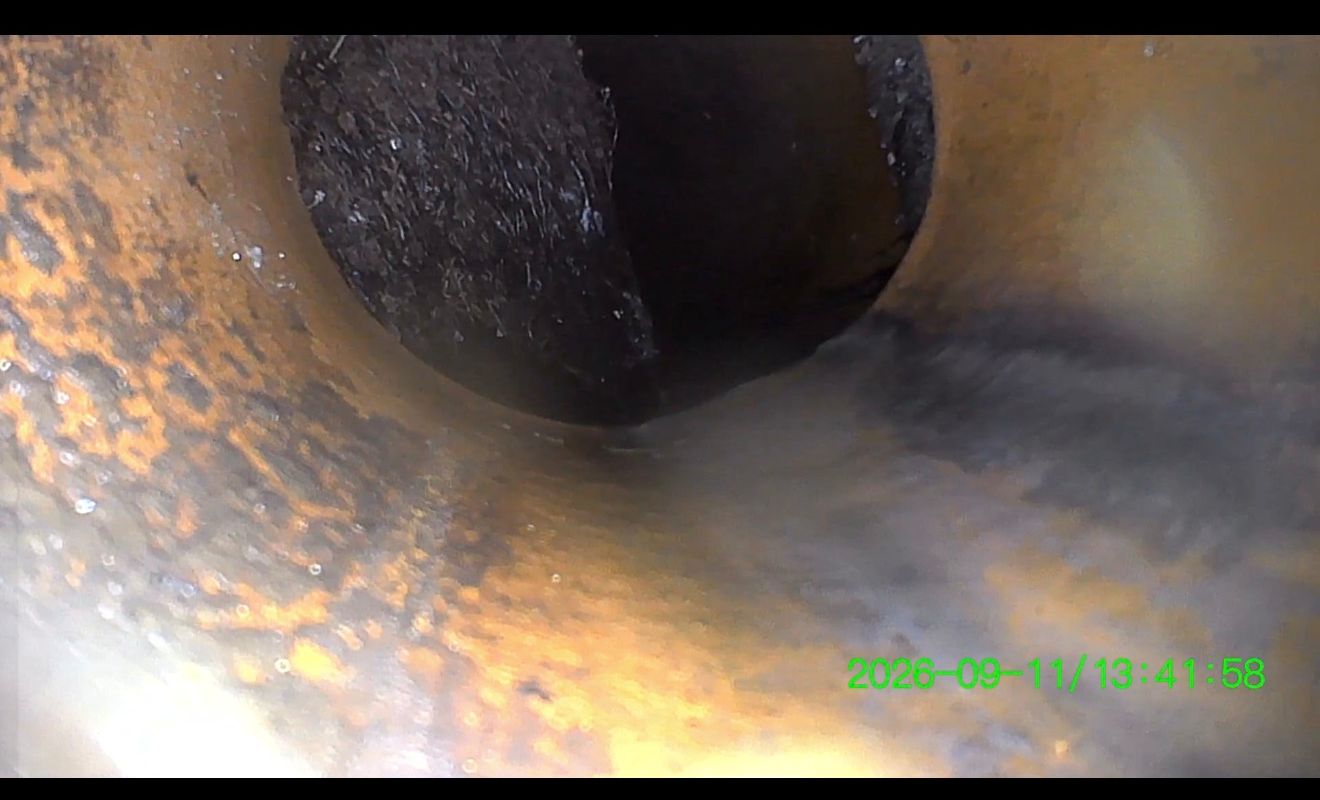
- Scale and internal corrosion: Older cast-iron drain lines can develop a rough, narrowed interior that holds debris.
- Offset, cracked, bellied, or collapsed pipe: Structural defects can interrupt flow or create low areas where solids collect.
- Municipal sewer conditions: A problem inside the public sewer main can push wastewater toward connected properties.
The correct response depends on the cause, pipe material, pipe condition, available access, and what a camera can actually show.
The appropriate service may involve mechanical cabling, hydro jetting, camera inspection, locating, preventive maintenance, or documenting a condition for a qualified repair provider outside Honest Drain’s service scope.
Is the Homeowner or the City Responsible in Cranston?
The City of Cranston publishes a specific division of sewer responsibility:
- Cranston Public Works maintains pump stations and public sewer mains, which are typically located in the roadway.
- The property owner is responsible for internal plumbing, the sewer lateral from the structure to the main, the cleanout, and the backflow valve.
- The building lateral—from the structure to the cleanout—is fully maintained by the property owner.
- The street lateral—from the cleanout to the public main—is also owned by the property owner. Veolia may flush and inspect this section as a courtesy during a backup when the cleanout is accessible.
- Cranston warns that its courtesy flushing service provides temporary relief and is not necessarily a permanent solution.
As of September 2026, Cranston directs residents experiencing a sewer backup to contact Veolia at:
- 401-467-7210, extension 101 from 7 a.m. to 3 p.m., Monday through Friday
- 401-942-2121 during evenings, weekends, and holidays
Verify the current contact information on the City of Cranston sanitary sewer page.
Responsibility rules differ between municipalities. Homeowners in Providence, Warwick, or another Rhode Island community should contact their own sewer authority instead of assuming Cranston’s rules apply.
What a Drain and Sewer Service Visit Should Include
A professional visit should begin with questions:
- Which fixture triggered the backup?
- Is the water still rising?
- Did the problem begin during heavy rain?
- Have several fixtures reacted?
- Has the line been serviced before?
- Did the problem return shortly after a previous service?
Once on site, the technician should protect the work area, identify safe access, determine which part of the system is holding water, and select the cleaning method based on the available evidence.
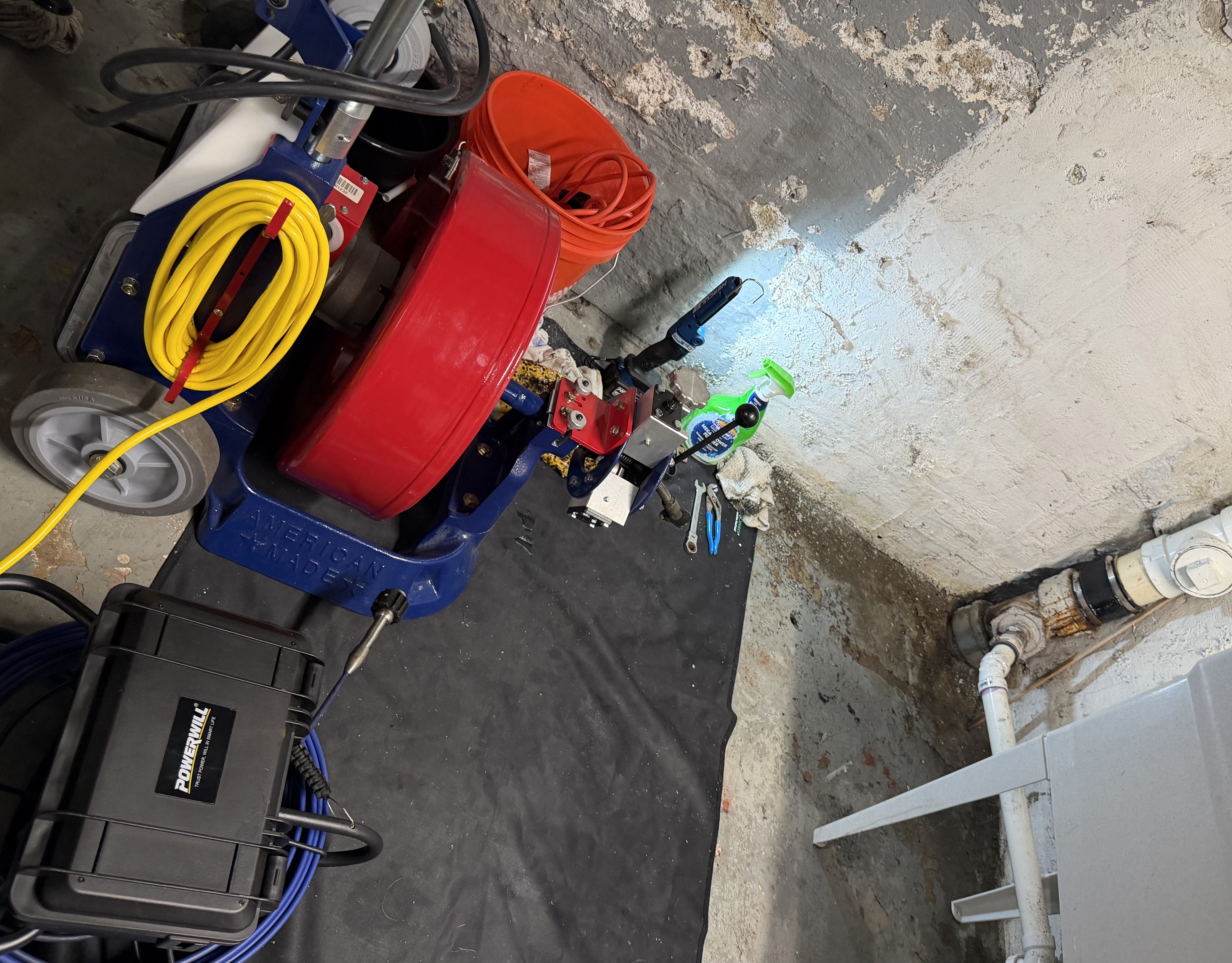
Basement floor drain cleaning may address an isolated trap or branch-drain problem.
A restriction farther downstream in the building sewer may require professional sewer-line cleaning.
Why the Camera May Come After the Line Is Open
A sewer camera cannot always provide a useful view through an active blockage.
Standing wastewater, grease, debris, or the obstruction itself may prevent the camera from advancing or hide the pipe walls.
The practical order is often:
- Establish safe access.
- Restore enough flow to move the wastewater.
- Clean the line as appropriate for its condition.
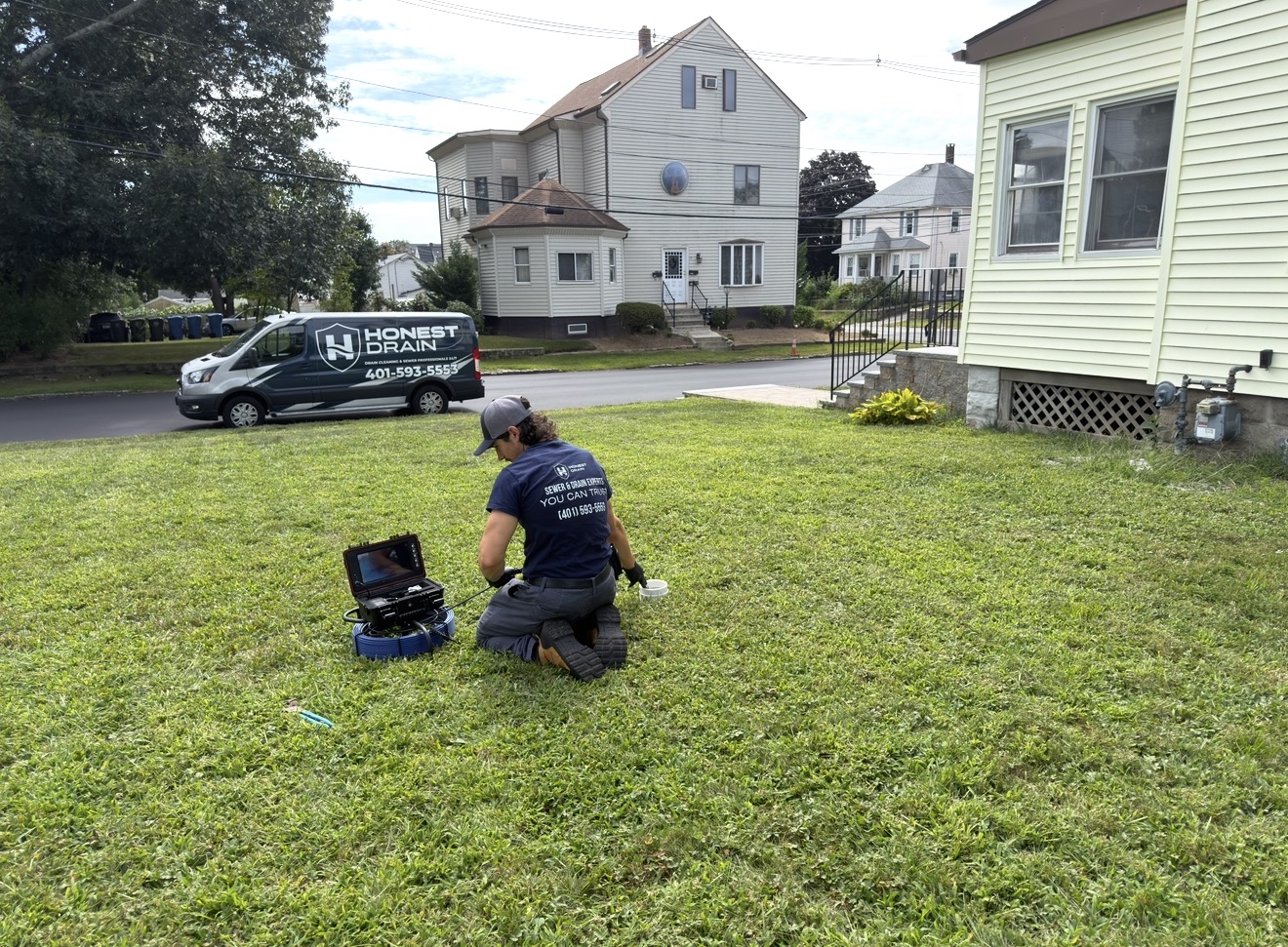
- Perform a sewer camera inspection once the pipe is sufficiently open and visible.
- Locate and document a defect when the evidence supports it.
Clearing, Cleaning, and Documenting Are Different
Clearing opens a path so wastewater can move.
Cleaning removes additional material from the pipe walls when the pipe’s condition and the selected method allow it.
Camera inspection and locating document visible pipe conditions and their approximate position.
None of these actions automatically means a damaged pipe has been repaired.
If a camera reveals a structural problem, Honest Drain can record and locate the condition, explain the findings, and help the customer understand the appropriate next step. We will not pretend an open sewer line has been permanently repaired when the evidence only proves that it was flowing at the time of service.
When to Call Immediately
Call for urgent drain and sewer help when:
- Wastewater is entering an occupied area.
- The water at the floor drain is actively rising.
- Flushing a toilet or draining an appliance causes another fixture to back up.
- More than one fixture is affected.
- A cleanout is leaking or overflowing.
- The problem returns shortly after service.
- Water is near electrical equipment and you cannot safely approach the area.
For an immediate electrical, fire, or medical danger, stay out of the water and contact the appropriate emergency service.
Preventing Another Backup Depends on the Cause
There is no single maintenance schedule that is appropriate for every Rhode Island property.
- If grease or sludge caused the restriction, change disposal habits and use a cleaning method appropriate for the pipe.
- If wipes or foreign material are found, keep those products out of the drainage system.
- If roots are present, use the camera findings and recurrence history to establish an inspection or maintenance plan. Root clearing does not seal the opening through which the roots entered.
- If scale is narrowing an older cast-iron line, document the pipe’s condition before choosing a cleaning method.
- If the sewer line is structurally damaged, use camera and locating evidence to determine the appropriate next step with a properly qualified repair provider.
- If municipal sewer backups are involved, speak with the local authority and an appropriately licensed professional about property-specific protective options.
Prevention should follow the diagnosis. Routine drain cleaning cannot guarantee that a structurally defective sewer line will never back up again.
Frequently Asked Questions
Why is sewage coming up through my basement floor drain?
The floor drain is often one of the lowest openings in a home’s drainage system. When a shared drain or main sewer line cannot carry flow, wastewater can move backward and emerge through the floor drain.
An isolated floor-drain clog, private sewer-lateral defect, or municipal sewer condition is also possible.
Why does my basement drain back up when the washing machine drains?
A washing machine releases water quickly. That sudden flow can expose a partial restriction in a shared branch or main sewer line.
Stop the washing machine and do not repeat the cycle to test the drain.
Why does water rise when I flush a toilet?
The toilet and basement floor drain likely share a downstream path. Water moving at one fixture when another fixture drains is a strong reason to stop using water and have the shared line evaluated.
Should I use chemical drain cleaner?
No. Chemical drain cleaners do not correct most main-sewer problems and may remain trapped inside the backed-up system, creating an exposure risk for people and service equipment.
Can a camera inspect the sewer during an active backup?
Sometimes, but the clearest view often comes after enough flow has been restored.
Standing wastewater or the obstruction itself can block the camera’s view and prevent it from advancing through the pipe.
Does clearing the sewer mean the pipe has been repaired?
No. Clearing restores a flow path at that time.
A sewer-camera inspection may reveal roots, offsets, cracks, a belly, or another condition that still needs to be documented and addressed appropriately.
Who should I call for a sewer backup in Cranston?
For a problem that appears to involve the property’s private drain or sewer lateral, call a drain and sewer professional.
Cranston also instructs residents to contact Veolia during a sewer backup because the public main or street-side conditions may need to be investigated.
Get Help With a Basement Drain Backup in Rhode Island
Honest Drain & Sewer provides owner-operated drain and sewer service in Cranston and nearby Rhode Island communities.
Our approach is straightforward:
- Protect the work area.
- Restore flow using the appropriate method.
- Document what the sewer line shows when possible.
- Explain the evidence clearly.
- Avoid unnecessary upselling.
If water or sewage is coming up through your basement drain, stop using water and call (401) 593-5553.
For non-urgent service, contact or book Honest Drain online.