Preventive Maintenance
Outdoor Drain Not Draining? A Rhode Island Property Guide
Outdoor drain still flooding after you clear the grate? Learn what Rhode Island homeowners and businesses should check and when to call Honest Drain.
You rake the leaves off the drain. The grate looks clear. Then it rains again, and the same puddle spreads across the driveway.
At a house, that water may creep toward the garage. At a business, it may cover the walkway customers use or collect where deliveries unload. Either way, cleaning what you can see has not answered the important question: where is the water getting held up?
An outdoor drain that is not draining can have a blocked inlet, a basin full of sediment, a restricted underground pipe, or a problem where the water is supposed to discharge. Sometimes the trouble is the surrounding grade or the amount of runoff, rather than a clog. The next step depends on which part is failing.
Here is how to make sense of the symptoms before booking exterior drain cleaning in Rhode Island—and what to ask for when you call.
Water approaching a doorway or creating a hazard? Keep people away from the flooded area and call Honest Drain at (401) 593-5553. Describe where the water is collecting and whether it is still rising. Do not enter floodwater or try to lift a submerged grate.
A clear grate is only the beginning
Think of an outdoor drainage system as a route. Water needs to enter, travel through the connected pipe, and reach a place that can accept it. A clean opening tells you about only the first part.
Follow the water: surface → inlet or basin → connecting pipe → discharge point.
Your property may have a long channel drain across the driveway, a small yard drain, or several catch basins around a parking lot. The layouts differ, but the useful question stays the same: which part of the route is not doing its job?
1. The inlet: can water reach the opening?
A mat of wet leaves can cover a grate. Sand and mulch can fill a narrow channel. Water may also bypass an otherwise clear drain if the pavement or soil directs runoff somewhere else.
From a safe, dry spot, look at where the puddle forms relative to the drain. Is the water sitting directly over it, or collecting several feet away without reaching it? That distinction helps separate an intake problem from a surface-drainage problem.
2. The basin: what is collecting below the grate?
A catch basin commonly has a low section, called a sump, where sediment settles below the outlet pipe. The basin can need cleaning even when the grate is spotless.
Rhode Island DEM's catch basin guidance explains that sediment and debris must be removed periodically to help prevent blockages and reduce pollution reaching waterways. Clearing the surface does not remove the material stored underneath it.
Also, water visible inside a catch basin does not automatically mean it is clogged. A sumped basin may retain water below its outlet. Overflow, sediment accumulation, and the way the connected line drains are more useful clues than the mere presence of water.
3. The pipe: can water leave the drain?
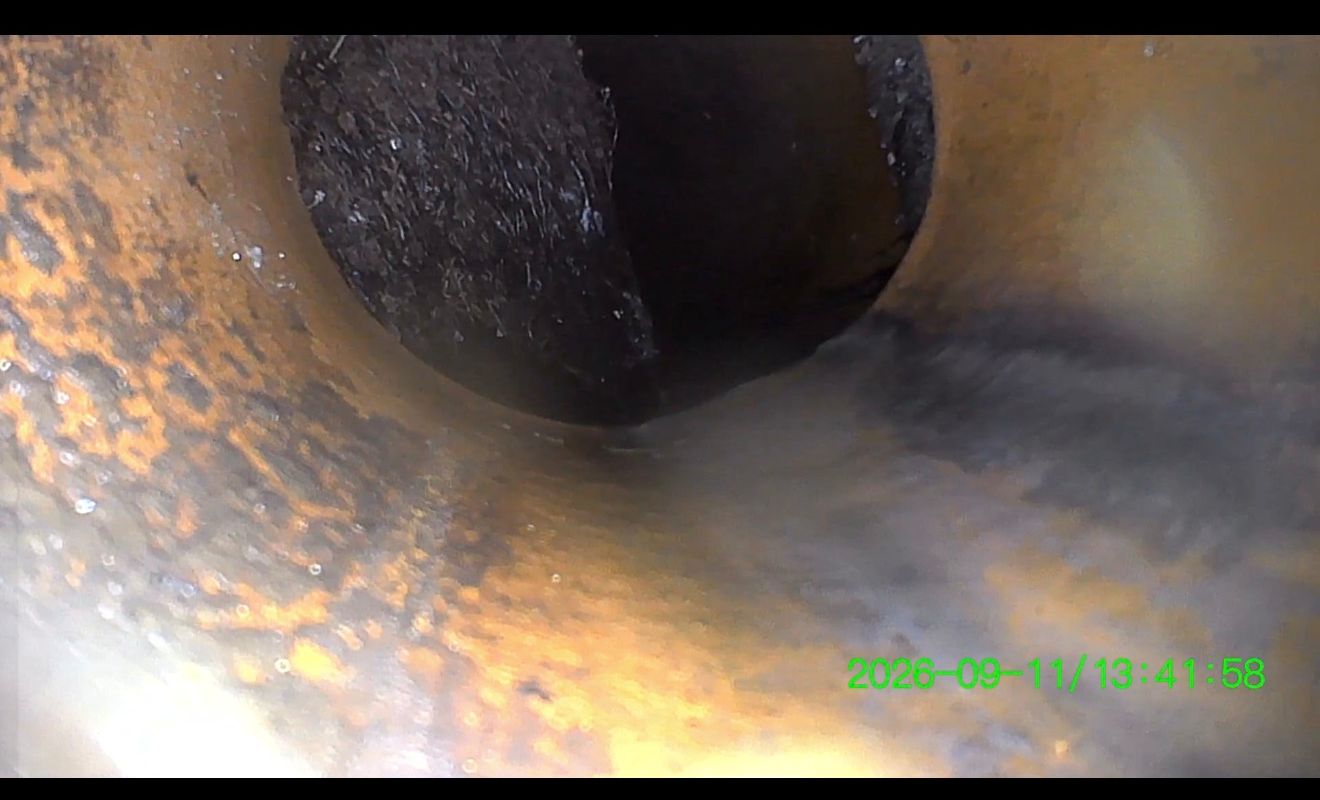
The opening can be clear while the buried line is restricted by sediment, debris, or roots. Damage to a pipe can also interfere with drainage. Those possibilities cannot be distinguished just by looking at a puddle.
If clearing loose surface debris makes little difference—or the same problem returns—have the connected line assessed. Avoid pushing a rod or pressure-washer hose into an unknown pipe. The material, condition, route, and endpoint affect which cleaning method is appropriate.
4. The discharge point: where does the water go?
Some systems discharge through a visible outlet or pop-up emitter. Others connect to a larger drainage system or an infiltration structure. Do not assume you know the destination because the pipe disappears underground.
A blocked outlet, a downstream restriction, or an infiltration area that cannot accept more water can leave an upstream drain full. Cleaning the inlet alone will not resolve those conditions. If the destination is unknown, ask about tracing the route and checking the outlet as part of the visit.
What the puddle can tell you
Use these observations to describe the problem. They are clues for a service visit, not a diagnosis from a distance.
| What you notice | What needs checking |
|---|---|
| Leaves cover the grate, and water pools directly over it | The inlet and any debris immediately underneath |
| The grate is clear, but the drain fills and overflows | Sediment in the basin, the connected pipe, and the discharge route |
| Water collects beside the drain without reaching it | Pavement or soil slope, inlet position, and the path of runoff |
| One drain overflows when another nearby drain receives water | Whether they share a restricted downstream line |
| The problem appeared after landscaping or paving | Changed runoff paths, buried outlets, and possible construction debris or damage |
| Flooding occurs only during unusually intense rain | Both maintenance condition and the system's capacity; a clean drain can still be overwhelmed |
Try to note whether this is new behavior. A driveway that drained well for years and now floods after ordinary rain presents a different starting point from a low area that has always held water.
For homeowners: driveway, garage, and yard drains
Start with the location that is actually flooding. “Water stops at the channel in front of the garage” is more useful than “the yard is wet.”
For a driveway channel drain, note whether the whole channel fills or only one end. For an underground downspout connection, describe whether water spills out where the downspout enters the ground. If you know where an outlet is, point it out to the technician without digging it up or taking it apart.
Honest Drain's driveway drain cleaning service addresses driveway and trench drains. Our exterior drain services also cover yard drains, underground downspout extensions, outlet locating, and inspection of accessible underground lines.
If water is coming up through an indoor floor drain instead, say that when calling. That is a different symptom from rain collecting outside; our guide to sewage coming up through a basement floor drain covers that situation.
For businesses: look beyond the flooded parking space
On a commercial property, several inlets may connect to the same line. The basin with the biggest puddle is the place to start investigating, but it may not be the only location that needs attention.
Before a visit, give each affected drain a simple description: “rear loading door,” “north parking row,” or “restaurant entrance.” Mark those locations on a site plan if one is available. Include any known shared drainage with neighboring property.
For commercial catch basin cleaning, discuss the basin count, access, accumulated material, and whether outlet-line cleaning is needed. Removing sediment from a sump and cleaning a connected pipe are separate parts of the scope. Neither should be assumed from the phrase “clean the drain.”
Also explain when delivery trucks arrive, which parking spaces must remain available, and whether a gate or tenant controls access. Honest Drain offers coordinated scheduling and documented service tickets for commercial work. A clear site description makes that coordination much easier.
Useful questions for the property file: Which basins were serviced? What material was removed? Which outlet lines were checked or cleaned? What still needs follow-up? Keep the answers with the service date so the next visit starts with a history.
What you can safely do before service
- Gather observations. From a dry, safe location, photograph where water collects and note whether it happens during light rain, heavy rain, or both.
- Remove loose surface litter when conditions are safe. Stay on your property, away from traffic and floodwater. Collect leaves and debris; do not sweep them through the grate.
- Keep access available. Move parked vehicles from service areas when safe, and tell the technician about locked gates or known underground utilities near the work area.
- Leave covers and basin entry to professionals. Heavy grates, hidden openings, and underground structures create hazards that are easy to underestimate.
- Skip chemical drain cleaners. Do not pour them, wash water, or other waste into an outdoor storm drain.
Rhode Island DEM explains that storm drains can carry pollution directly to local waterways. Its stormwater guidance specifically identifies yard waste, soapy water, oil, and other wastes as materials that do not belong there. Outdoor cleaning should remove debris from the system, not wash it farther downstream.
If the affected inlet is in a public street, report it to the municipality responsible for that roadway. Do not remove a street grate or attempt work in traffic. A private-property service visit cannot promise to resolve a restriction in public infrastructure.
What should exterior drain cleaning include?
Ask for a scope that follows the problem through the system. Depending on the layout and findings, that may include clearing the inlet, removing basin sediment, cleaning the connecting line, locating an outlet, and inspecting accessible pipe when needed.
Then ask how the result will be checked. A controlled water test can show how the serviced section flows at the time of the visit. It does not reproduce every storm or guarantee that the site can handle any amount of rainfall.
If a cleaned line still does not drain properly, the next conversation should address the remaining evidence. Damaged pipe, an unsuitable slope, or a downstream capacity problem may call for further evaluation. Repeating the same cleaning without understanding why water remains is not a maintenance plan.
How often should outdoor drains be cleaned?
Base the schedule on what the property collects and what previous visits find. A drain under mature trees, a sandy parking lot, and a sheltered patio do not receive the same debris load.
For Rhode Island properties, checking surface inlets during leaf fall and after winter sand accumulates is a practical starting point. Check again after landscaping or paving changes. Those checks help identify when professional service is needed; they do not replace inspection of the basin and line.
Commercial sites with repeat trouble can use service records to set a more useful schedule. Ask about a drain maintenance program based on the property's history and any applicable site maintenance plan.
Common questions about outdoor drains
Can hydro jetting fix an outdoor drain that keeps flooding?
It can help with suitable blockages in suitable pipe. It will not change the slope of the parking lot, repair a broken pipe, or make a saturated discharge area absorb more water. The system should be assessed before choosing the equipment.
Is catch basin cleaning the same as storm drain cleaning?
The terms can overlap in conversation. Catch basin cleaning generally focuses on material collected in the inlet structure and sump; storm drain work may also involve the connected lines. Confirm the structures and pipe sections included in the quote.
How much does outdoor drain cleaning cost in Rhode Island?
The scope depends on access, basin size and count, debris volume, pipe length, and any inspection or outlet locating required. Describe those details when requesting a quote. Ask whether material removal, line cleaning, and flow testing are included so you can compare like-for-like work.
Should a clear drain eliminate every puddle?
No. Low pavement, runoff that bypasses the inlet, and drainage capacity can still cause pooling. Cleaning is useful when a restriction is part of the problem. Persistent water after cleaning deserves an explanation of what remains unresolved.
Get the water moving in the right direction
If your outdoor drain is not draining in Cranston, Warwick, Providence, or a nearby Rhode Island community, tell Honest Drain what happens when it rains. We can discuss the appropriate residential or commercial service and the access needed to assess the problem.
Call (401) 593-5553 or request an exterior drain service visit.
When you call, have three details ready: where water collects, when it happens, and what has already been tried. That gives us a useful starting point—and gives you a better conversation than another guess about the grate.