Homeowner Tips
Buying a House in Rhode Island? Check the Sewer Line Before You Close
Buying a Rhode Island home? Learn what a sewer scope inspection includes, what cameras can miss, and which questions to ask before closing.
You can walk through a house, turn on the faucets, flush a toilet, and still know very little about the pipe carrying wastewater out to the street.
That is an easy detail to miss when you are comparing roofs, heating systems, and everything else on the inspection report. The bathrooms work. Nobody mentions a backup. The sewer slips down the list.
Before it does, ask one question: Has anyone actually looked inside the sewer line?
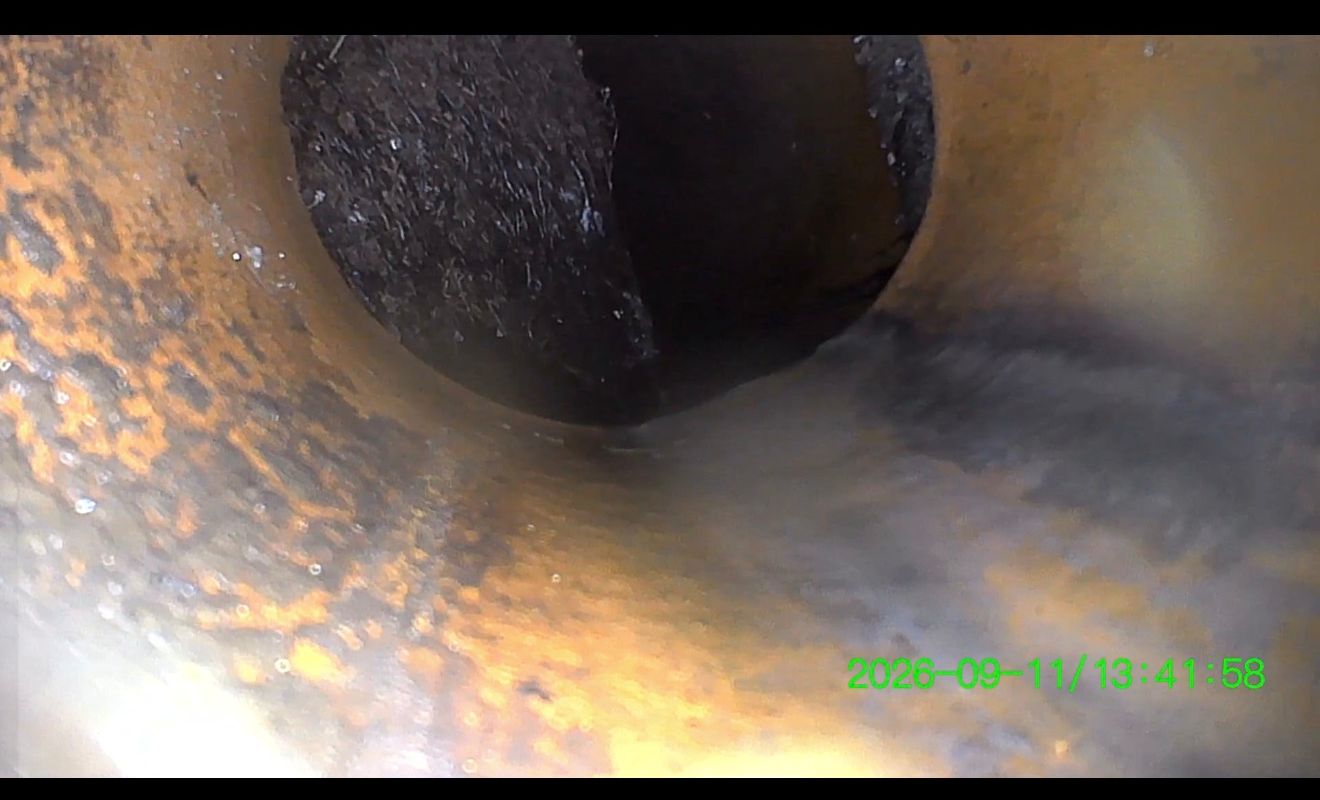
A sewer scope inspection uses a camera to examine the accessible interior of that buried pipe. For a Rhode Island homebuyer, it can help turn an unknown part of the property into something you can review: footage, visible findings, and a clear explanation of any sections the camera could not inspect.
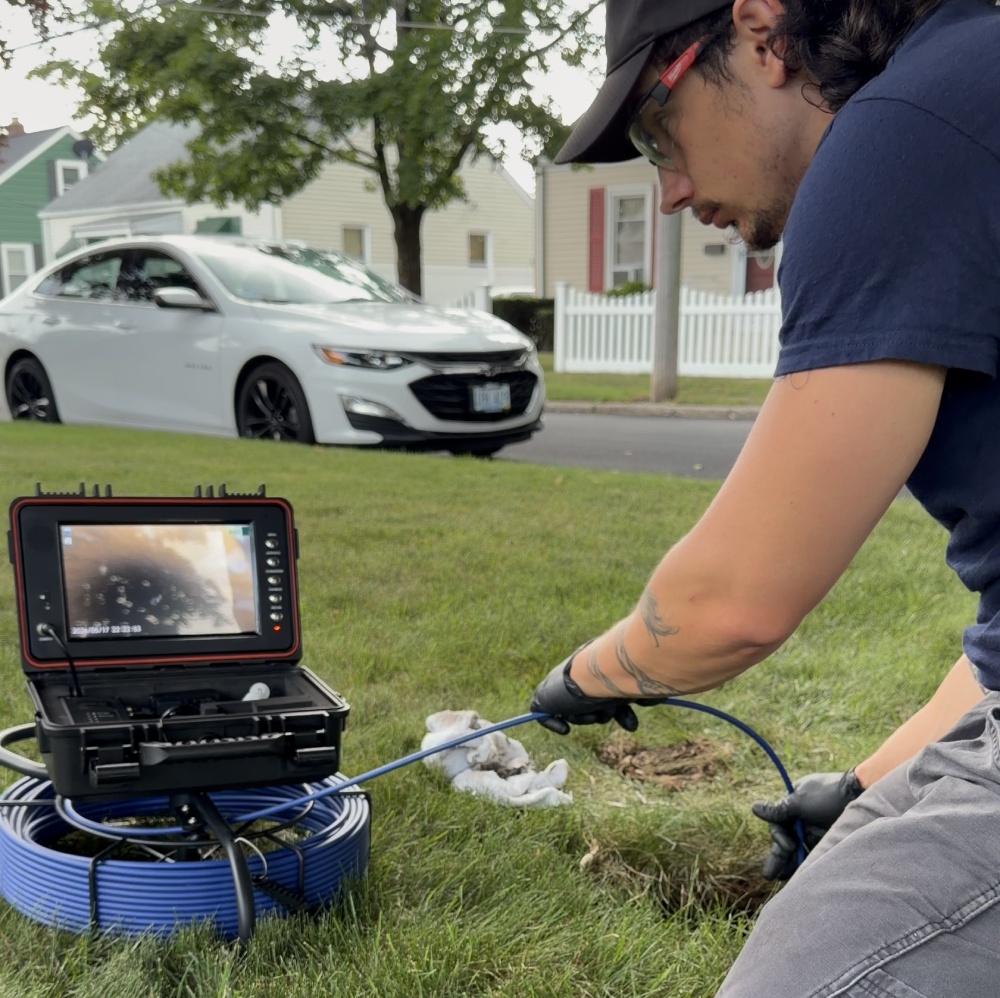
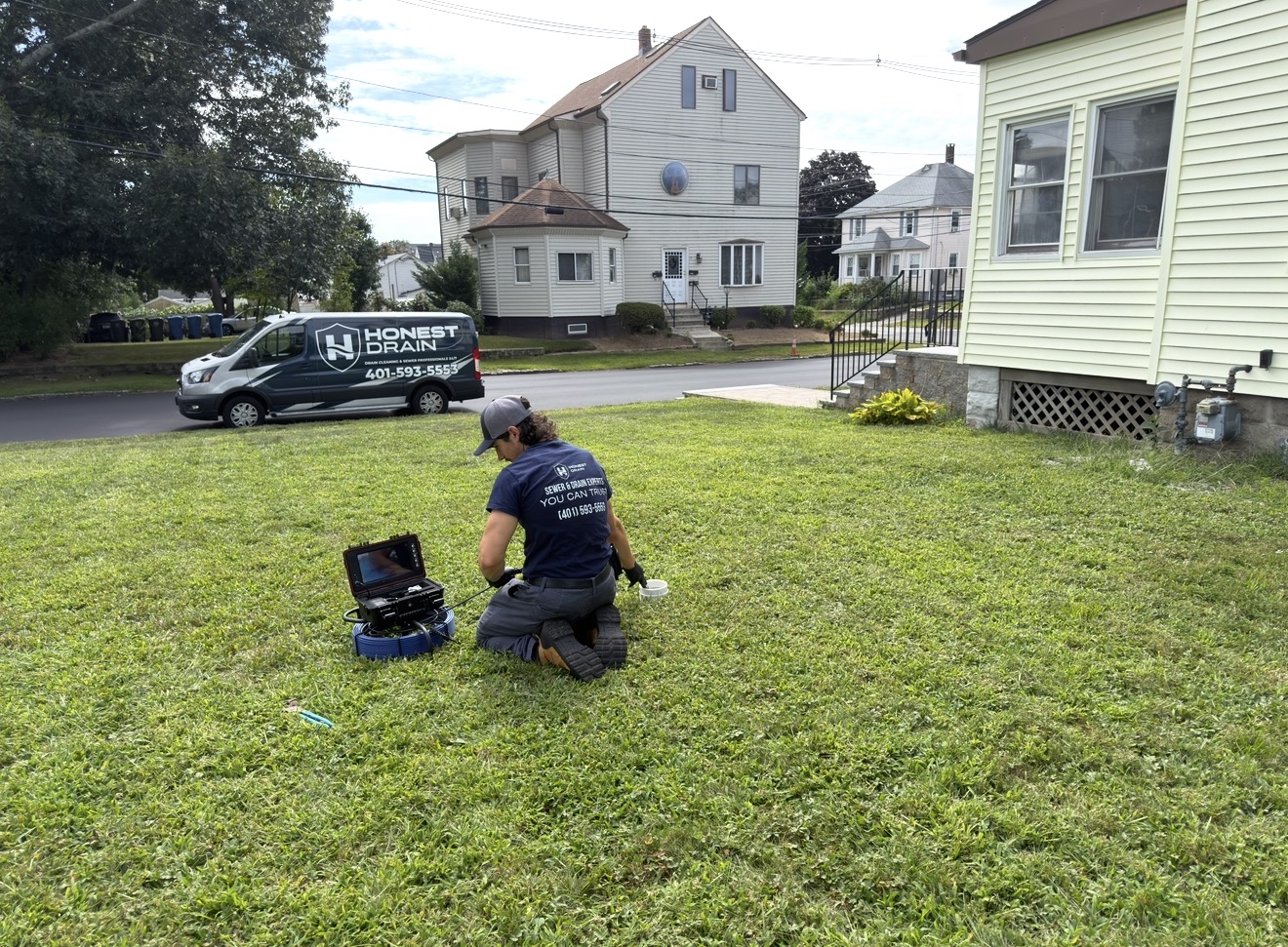
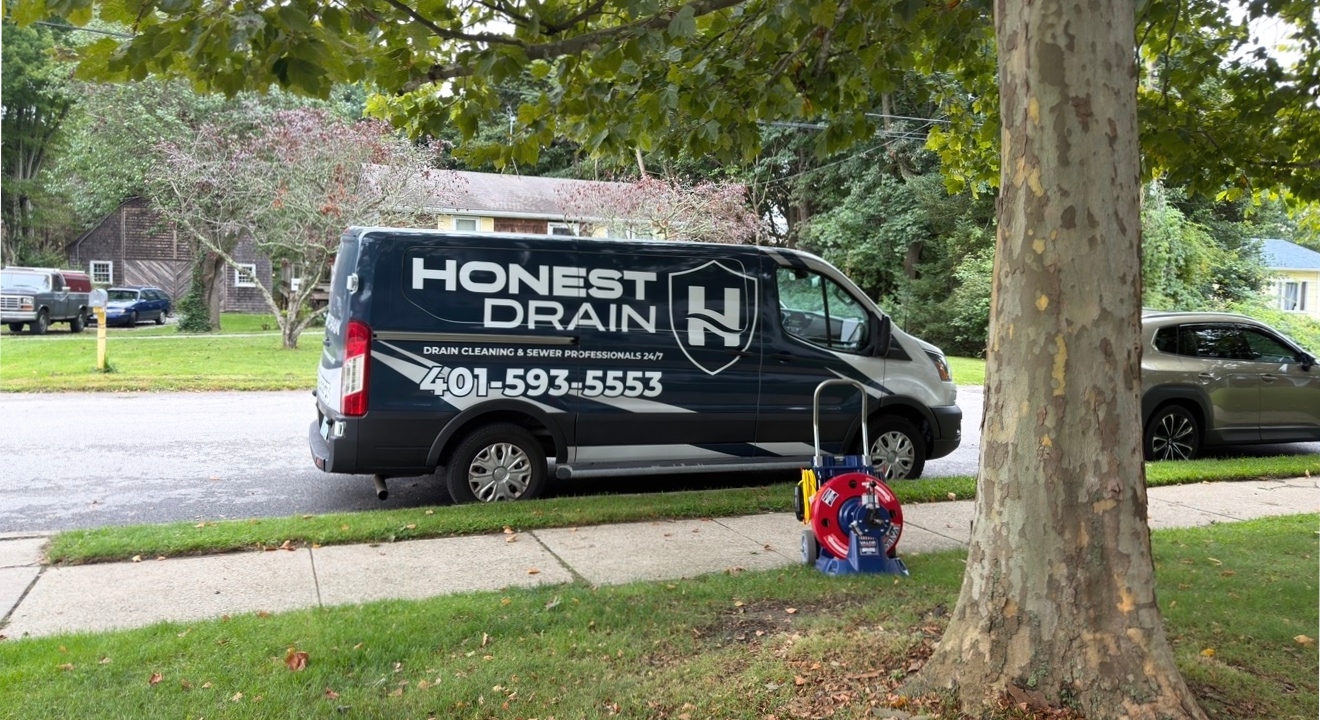
Honest Drain equipment at an outdoor cleanout.
Does a home inspection include a sewer scope?
Do not assume it does. Ask your home inspector whether the booked service includes a recorded inspection of the sewer lateral—the pipe connecting the house to the public sewer—or whether that requires a separate appointment.
The Rhode Island Association of REALTORS® lists sewer-line inspection among the additional inspections buyers may want alongside a general home inspection. InterNACHI also describes sewer scoping as an optional additional service under its general home-inspection standards. RI REALTORS® home-inspection guide · InterNACHI sewer-scope overview
Checking that a sink drains tells you how that fixture behaved during the visit. It does not show the joints, roots, buildup, or pipe condition farther underground.
When arranging a sewer camera inspection, explain that you are buying the property. Ask about access, recording, the intended endpoint, and when you will receive the findings. Those details matter when you have an inspection deadline.
“The drains work fine.” Is a sewer inspection still useful?
It can be. A sewer does not have to be completely blocked to contain a condition worth understanding before a purchase.
Pay particular attention when:
- The line has a history of cleaning or root cutting. Ask why the work was needed, how often it happened, and whether anyone recorded the pipe afterward.
- The house has been renovated. New bathrooms do not establish whether the buried sewer was replaced. Ask what work extended beyond the house.
- The property has older piping or an unknown sewer history. Age alone does not prove failure, but it makes records and a current view useful.
- Mature trees are near the suspected sewer route. Trees do not prove root intrusion. A camera can help establish whether roots are actually inside the accessible pipe.
- The seller mentions occasional backups, gurgling, or several slow fixtures. Our guide to signs of a clogged main sewer line explains those symptoms in more detail.
Even a newer house can have a drainage problem. The useful question is what is known about this particular line, rather than whether the house is old enough to worry about.
What can a sewer camera show—and what can it miss?
With suitable access and visibility, a camera can show conditions inside the section it travels through. It cannot see through the pipe wall or inspect a section beyond an obstruction it cannot pass.
That makes the limits of the inspection just as important as the findings.
| Finding | What a buyer should ask next |
|---|---|
| Roots entering the pipe | Where are they entering, how much of the opening is affected, and can the surrounding joint or pipe be seen? |
| Grease, sludge, or heavy scale | Is the buildup limiting the view? Would appropriate cleaning allow a more useful inspection? |
| An offset or separated joint | Can the technician show the connection clearly and explain whether further evaluation is needed? |
| A visible crack or damaged section | Where is it, how much of it is visible, and who should evaluate the repair scope? |
| Standing water | How much of the view is obscured? What other evidence supports the explanation for the water? |
| A camera that stops short | What prevented further travel, and which part of the line remains uninspected? |
A stopped camera is an incomplete view, not proof that the rest of the sewer is fine.
Likewise, a video of murky water cannot establish the condition of the pipe hidden beneath it. Depending on the circumstances, the next step may involve clearing a restriction, cleaning, using another suitable access point, or documenting the limitation for further evaluation.
These distinctions follow the approach in InterNACHI’s sewer-scope standards, which call for reporting the inspected portions and explaining areas that were not inspected. Honest Drain’s guide to sewer-cleaning equipment, cameras, and locating explains how those tools answer different questions.
In Cranston, the private sewer can extend into the street
Being connected to a public sewer does not mean the city maintains every pipe between your bathroom and the sewer main.
Cranston’s Department of Public Works states that the property owner is responsible for the sewer lateral from the structure to the main, along with the internal plumbing, cleanout, and backflow valve. The city identifies the street-side portion of the lateral as privately owned too. City of Cranston sanitary sewer guidance
For a buyer, that changes the question from “Is the house on city sewer?” to “What is the condition of the pipe I will be responsible for?”
The five things to request from a pre-purchase sewer inspection
A useful inspection should leave you able to explain what was checked. Before booking, ask what documentation the service includes and when it will be delivered.
1. A recording tied to the right property
Ask for the video and enough identifying information to connect it to the property and inspection date. A brief clip of one defect may be useful, but ask whether you can also review the rest of the recorded inspection.
2. The starting point and endpoint
Where did the camera enter? Which direction did it travel? Did it reach the intended end of the inspection, or stop earlier?
An outside cleanout may allow inspection toward the street without showing the drain under the house. Ask which sections were actually included.
3. Findings explained in plain language
You should understand what the image shows, where the concern appears along the inspected route, and what follow-up is recommended. Ask the technician to distinguish a visible condition from a suspected cause.
4. A clear account of the limitations
Was part of the pipe underwater? Was access blocked? Did a bend or obstruction prevent further travel? Have the uninspected areas identified instead of treating silence about them as a clean bill of health.
5. A practical next step
The outcome might be no immediate work recommended in the inspected section, a maintenance recommendation, further inspection after cleaning, or evaluation by a qualified repair provider. Ask what evidence supports that next step.
If the location of a finding matters, ask whether locating is included. Camera distance along a pipe is not the same as a marked position in the yard. Surface locating can help connect the two, subject to access and signal conditions.
What if the inspection finds a problem?
Start with the footage and explanation. The word “roots” does not tell you the full extent of the condition. Neither does “old pipe.”
For example, if roots obscure a joint and prevent the camera from advancing, the immediate finding is root intrusion plus an incomplete inspection. You still need a clearer view before assuming how much pipe needs attention.
Cleaning may help establish that view when the pipe condition and access support it. Cleaning does not repair a damaged joint or seal an opening where roots entered. If a structural concern remains, request an evaluation and a defined scope from an appropriately qualified repair provider.
Bring the findings to your real estate representative while there is time to discuss them. Confirm your actual contract deadlines with that representative or your attorney. Leave room for a second visit if the first inspection cannot reach or clearly show the necessary section.
The goal is to understand the condition and its implications before making the purchase decision.
How much does a sewer scope inspection cost in Rhode Island?
Request a quote for the property and the work included. A camera visit through an accessible cleanout is a different scope from a visit that also requires drain clearing, additional access, or locating.
When comparing quotes, ask whether the price includes:
- The intended length and sections of the inspection.
- A digital recording and explanation of the findings.
- Locating a significant finding, if needed.
- Any cleaning required to restore visibility.
- A return visit if the first inspection is incomplete.
Ask what could change the quoted scope before work starts. A lower number is hard to compare if the two services include different things.
A short checklist before you close
Save this list for your inspection appointment:
- Confirm whether the property uses public sewer or an on-site wastewater system.
- Ask whether your home-inspection booking includes a sewer scope.
- Request available sewer-service records and prior inspection footage.
- Coordinate property access and permission through the seller or agent.
- Confirm the inspection route, recording, price, and delivery timing.
- Review any uninspected sections and recommended follow-up.
- Discuss unresolved findings before your agreed inspection deadline.
If the home uses septic: a camera inspection of the pipe leading to the tank is not a complete evaluation of the septic system. Arrange the appropriate on-site wastewater inspection separately. RI REALTORS® lists sewer-line and septic-system inspections as separate additional inspection types in its buyer guide.
Common questions from homebuyers
The seller just had the sewer cleaned. Do I still need a camera?
Ask what prompted the cleaning and whether a recording was made afterward. A line flowing after service tells you that flow was restored at that time. It does not, by itself, document the condition of the whole pipe.
Is a sewer scope the same as a sewer camera inspection?
The terms commonly describe a video inspection inside a sewer line. The booked scope matters more than the label: confirm the access point, route, endpoint, recording, and exclusions.
Can a sewer inspection guarantee there will be no future backups?
No. It documents visible conditions in the inspected portions at the time of the visit. Hidden defects, inaccessible areas, and future changes remain outside what the recording can establish.
Should I wait until the final walkthrough?
Schedule early enough to receive the findings and arrange any necessary follow-up within your agreed inspection period. A last-minute inspection leaves less time to resolve unanswered questions.
Buying in Cranston or a nearby Rhode Island community?
Honest Drain provides sewer camera inspections for property transactions in Cranston, Warwick, Providence, and nearby Rhode Island communities. We can discuss the available access, inspect accessible pipe, and explain the visible findings. Digital recordings are available on request; mention that you need one when booking.
Call (401) 593-5553 or request a sewer camera inspection online. Tell us the property location, that you are buying the home, and your inspection deadline so we can discuss scheduling and the right scope.
Know what was inspected. Understand what was found. Go into closing with fewer unanswered questions.